How to Choose the Right Rug Size for a Cozy Living Room
A practical guide to measuring your living room and picking a rug size that anchors the seating, leaves comfortable walkways, and makes the whole space feel warmer.
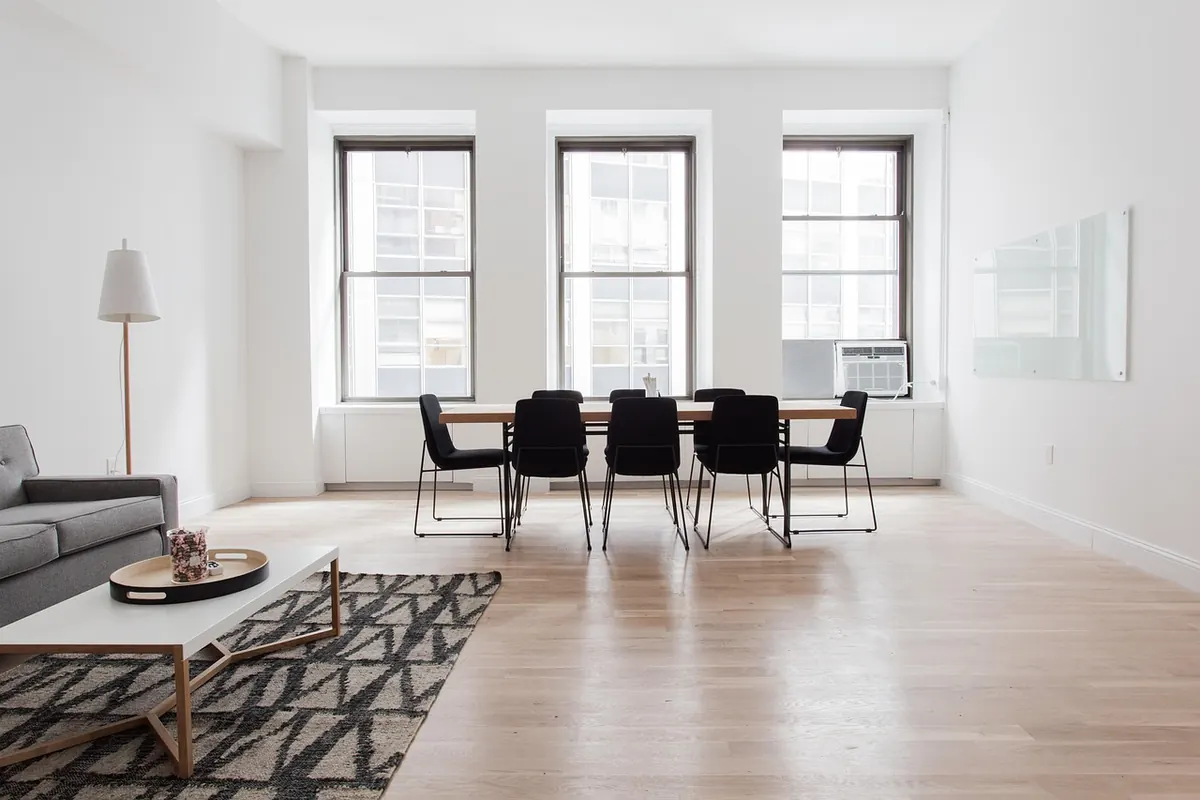
A rug does more for a cozy living room than almost anything else you can put in it. It softens footsteps, warms a cold floor, and quietly tells the furniture where to sit. Choose one that is too small, though, and the room starts to feel like a waiting area where nothing quite belongs. Choose one that swallows the floor, and you lose the layout along with the budget.
The good news is that rug sizing is mostly arithmetic plus a little observation. You do not need a designer's eye. You need a tape measure, a roll of painter's tape, and a clear sense of how you want to use the room.
Size the Rug to the Furniture, Not the Room
This is the single idea that fixes most rug mistakes. A living room rug is not wallpaper for your floorboards. Its job is to gather the seating group into one conversation area, so the thing you measure first is not the room. It is the furniture.
Start by settling on an arrangement you actually like. Push the sofa, chairs, and side tables roughly where you want them, even if it means living with an awkward gap for a week. Then measure the outer footprint of that group: from the outside edge of the left-hand chair to the outside edge of the right-hand chair, and from the front of the sofa to the front edge of whatever faces it. Add eight to twelve inches on every side. That number is your target rug size, and it is usually smaller than people expect in a tight room and larger than people expect in an open one.
Measure the Space in Six Steps
Once you have that footprint, check it against the room itself. Here is the order that saves the most returns.
- Clear the floor. Shove everything to the walls, or at least out of the area you are measuring, so you can see the full rectangle.
- Measure the seating group as described above and write the numbers down. Do not trust memory.
- Mark the rug with painter's tape. Lay out the exact rectangle you are considering. Painter's tape peels off cleanly and shows scale better than any online photo.
- Check your walkways. Leave at least 18 inches of bare floor along main paths, and 24 inches if the room allows it. Tighter than 18 inches and people instinctively step on the rug edge, which curls and trips.
- Look at doorways, vents, and radiators. A rug that blocks a floor vent or jams under a door will annoy you daily.
- Live with the tape for a day. Walk through it, sit inside it, set a coffee cup roughly where the table goes. If the rectangle feels cramped, go up a size rather than down.
The Rule of Legs
Here is the quickest way to know whether a rug is right: look at the furniture legs.
- All legs on the rug. The calmest, most finished look. Every piece of seating sits fully on the rug, with a border of bare floor around it. This suits larger rooms and rugs of 8x10 and up.
- Front legs on, back legs off. The workhorse option for small and medium rooms. The sofa's front legs and the chairs' front legs rest on the rug, which still visually connects everything. A 5x8 or 6x9 often handles this nicely.
- Nothing on the rug. Only the coffee table sits in the middle. This almost always reads as a mistake in a living room, because the rug becomes a coaster rather than an anchor.
If a rug only holds the coffee table, it is not holding the room together.
Common Sizes and What They Actually Fit
Rug dimensions vary slightly by maker, and a hand-knotted rug can be a few inches off its listed size, so treat these as ranges rather than rules.
5x8 and 6x9
Best for small sitting areas, apartments, and reading corners. Front legs of the sofa and chairs on the rug, coffee table in the middle. In a narrow room, a 5x8 placed lengthwise can work, but check that your walkways survive.
8x10 and 9x12
The two most useful living room sizes. An 8x10 usually lets you get all the front legs on and often the whole sofa. A 9x12 can hold an entire seating group with a generous border, which is what makes a large room feel intentional instead of echoey.
10x14 and larger
For big open-plan rooms where the sofa floats away from the walls. Measure twice here. Oversized rugs are heavy, expensive to return, and hard to shift once they are down.
Runners and rounds
A 2.5x8 runner suits a hallway beside the seating, a narrow strip behind a floating sofa, or the path between two doorways. A round rug works well under a single armchair or a small symmetrical seating group in a square room, but it rarely plays nicely with a long sofa.
Awkward Rooms, Sectionals, and Layered Rugs
Sectionals are the hardest piece to size around. Run the rug along the long side of the sofa rather than trying to center it under the corner, and accept that the chaise may hang off the edge. If the sectional is huge, a 9x12 positioned so the corner sits on the rug is usually the only option that looks deliberate.
In an open-plan space, a single rug defines the living zone by itself, which is exactly what you want. Keep the rug's edge parallel to the sofa, not to the wall, if the sofa floats. Layering is a genuinely useful trick here: a large flat-weave or jute rug in a neutral tone sets the boundary, and a smaller patterned rug sits on top where the coffee table lands. Just keep the top layer at least a foot inside the base layer and use a thin pad under the top rug so it does not slide.
Small Details That Change the Fit
Pile height matters. A thick, plush rug lifts sofa legs enough that the furniture can wobble, and it will not slide under a low door. A flat-weave or low-pile rug is more forgiving in tight rooms and easier to clean.
Add the pad to your measurements. A decent rug pad adds roughly a quarter inch of height and a surprising amount of comfort. It also keeps the rug from creeping across a hard floor.
Think about color against your floor. A rug close in tone to the flooring reads as more space, while a strong contrast draws a visible line around the seating group. Neither is wrong, but the contrast version makes the rug's size more obvious, so get the dimensions right first.
Check the orientation. Many patterns have a direction. Turn the rug so the pattern runs with the longer sightline of the room, and check the listing photos to see how the maker intended it.
A Last Check Before You Buy
Tape the rectangle on the floor one final time, then sit in the room from the doorway. Ask yourself three questions: do the front legs of the main seating land on the rug, is there a comfortable amount of bare floor left around it, and does the room feel warmer rather than busier? If all three are yes, buy it.
Read the dimensions on the product page carefully, including whether they are listed in feet or centimeters, and check the return policy before ordering something oversized. Buy a pad at the same time so you are not tempted to skip it. And when you are torn between two sizes, choose the larger one, as long as your walkways still work. A slightly generous rug makes a living room feel settled. A slightly stingy one never stops looking like a mistake.
Photo: Pexels / Pixabay