Common Mistakes That Make a Living Room Feel Cold (and How to Fix Them)
Cold-feeling living rooms usually come down to harsh light, bare floors, and unfilled corners. Here's how to spot each mistake and warm the room up.
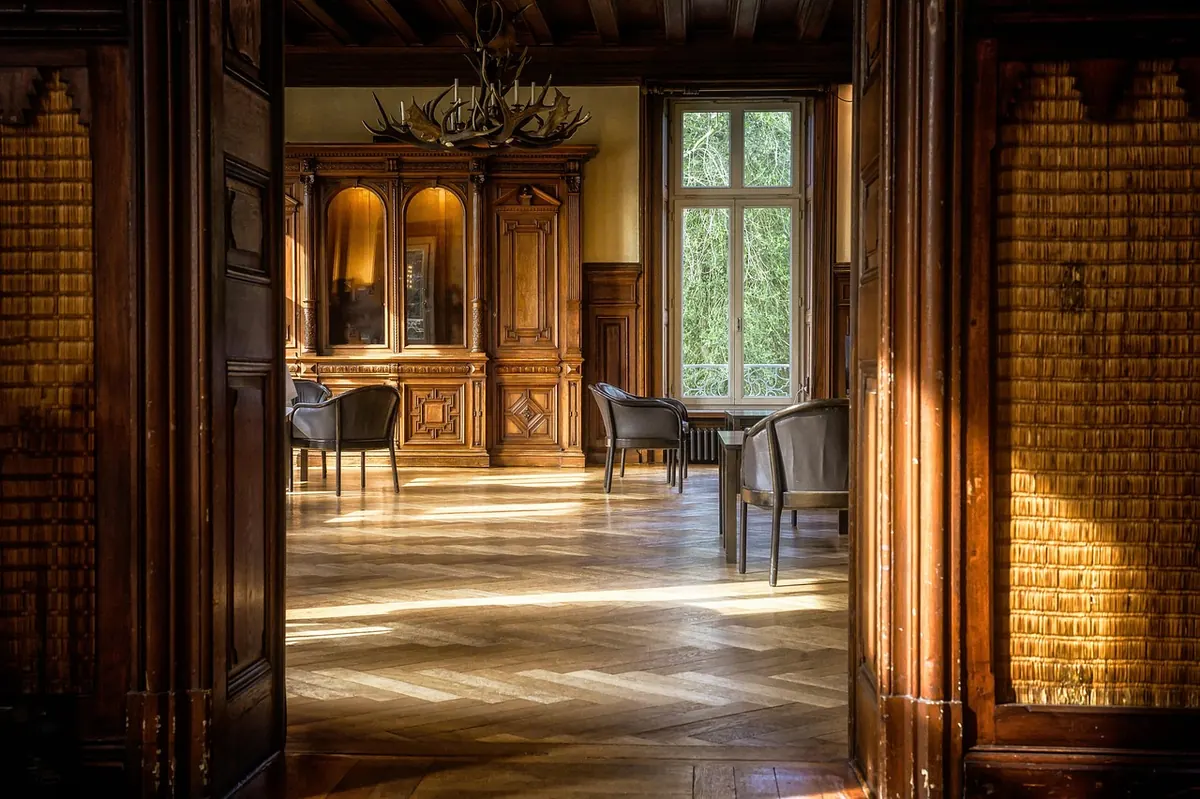
You walk into your living room with a cup of tea, ready to settle in for the evening, and something feels off. The room isn't unpleasant, exactly. It's just not inviting. Like a hotel lobby at three in the afternoon. If you've rearranged the furniture twice and still can't shake the feeling, the problem probably isn't the size of the room or the paint color you spent three weekends choosing. It's a handful of small, fixable choices that add up to one chilly impression.
Cold rooms aren't cold because they lack heat. They're cold because they lack softness, layering, and light that flatters. Here are the most common culprits, and what to do about each one.
The Lighting Is Doing All the Wrong Things
Nothing chills a room faster than a single ceiling fixture blasting cool white light from directly overhead. Overhead light flattens everything, casts shadows under your eyes, and turns a rich charcoal sofa into a gray slab. If your bulbs say "daylight" on the box, or sit well above 2700K on the Kelvin scale, they're borrowing the color temperature of an overcast afternoon.
The fix is layered light, and it costs less than almost any other change on this list.
- Swap overhead bulbs for warm white, around 2700K, and put them on a dimmer if the wiring allows.
- Add at least two lamps at different heights. A table lamp beside the sofa, a floor lamp in the corner behind it. Light should land at eye level or lower, the way candlelight does.
- Favor fabric shades over bare glass or metal. A linen or pleated shade softens the glow and hides the bulb itself.
- Turn the overhead off entirely in the evening. Use lamps only for a week and notice how different the room feels.
One more thing about bulbs
Mismatched bulbs are a quiet problem. If one lamp glows amber and another glows blue-white, the room reads as confused rather than warm. Buy one box of the same warm bulbs and replace them all at once.
Bare Floors Suck the Warmth Right Out
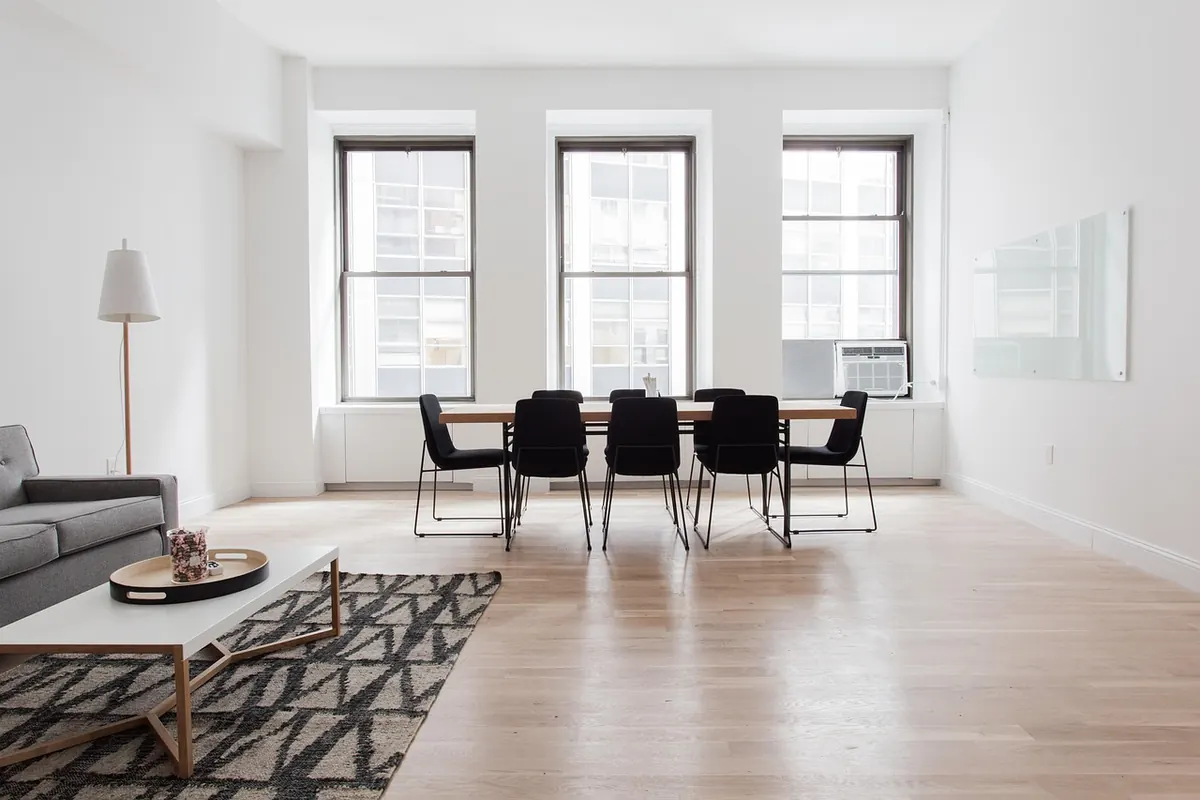
Hardwood, tile, and polished concrete are beautiful surfaces and terrible insulators, both thermally and visually. A room with no rug is a room where sound bounces, feet feel cold, and furniture looks like it's floating on a stage.
Size matters more than pattern. A rug that's too small reads as a bath mat in the middle of the floor. Look for one large enough that at least the front legs of your seating sit on it, and ideally all four. If the rug you love is smaller, layer it over a bigger jute or sisal base and let the neutral one carry the footprint. Add a decent pad underneath. It keeps the rug from creeping, muffles footsteps, and makes the whole thing feel more substantial underfoot.
Empty Corners Make a Room Feel Unfinished
Corners are where cold rooms give themselves away. A bare corner is a visual dead end, and two or three of them in one room create the impression that nobody actually lives there.
You don't need to fill every corner, and you shouldn't. Pick the ones you can see from where you usually sit. A tall plant with soft, arching leaves works in almost any light level if you choose accordingly. A floor lamp with a warm shade is the easiest fix of all. A woven basket holding folded throws, a small reading chair angled toward the sofa, or a slim console with a lamp and a stack of books all do the job.
The same logic applies to walls. Art hung too high leaves a gap that makes the room feel stretched and thin. Ten to twelve inches above the back of the sofa is a reliable range, and hanging a pair or a small grouping gives the wall enough weight to hold the space.
A Palette That's All Cool, All the Time
Gray is not the enemy, but gray on gray on gray, with cool blue undertones and silver-tone hardware, leaves nothing for the eye to warm up against. Cool palettes only feel inviting when something inside them is deliberately warm.
You don't have to repaint. Bring warmth in through the things you place against the walls: a camel leather ottoman, terracotta or olive cushions, a walnut side table, brass or aged bronze hardware, a black metal frame for contrast. Warm woods and warm metals do more heavy lifting than most people expect. If you are repainting, sample the color on two walls and look at it at night as well as in daylight. Undertones shift dramatically after dark, and a gray that looked creamy at noon can turn distinctly icy under a lamp.
Furniture That Doesn't Want to Talk to Anyone
Seating pushed flat against the walls, with a coffee table stranded in the middle of the room, kills conversation and coziness at the same time. It's a waiting room arrangement.
Pull the main pieces in and float them if the room allows. Eighteen inches between the sofa and the coffee table is comfortable for most people. Angle a chair toward the group rather than squaring it off, and bring in a small stool or pouf that can be moved where it's needed. If you can't float the sofa, at least angle one chair and add a side table so the seating has a reason to exist beyond facing forward.
Nothing in the Room Is Touchable
Look around and count the textures. If everything is smooth, matte, and hard-edged, the room will feel sterile no matter how well it's styled. Warmth comes from contrast: chunky wool against velvet, raw linen against polished wood, ceramic against glass.
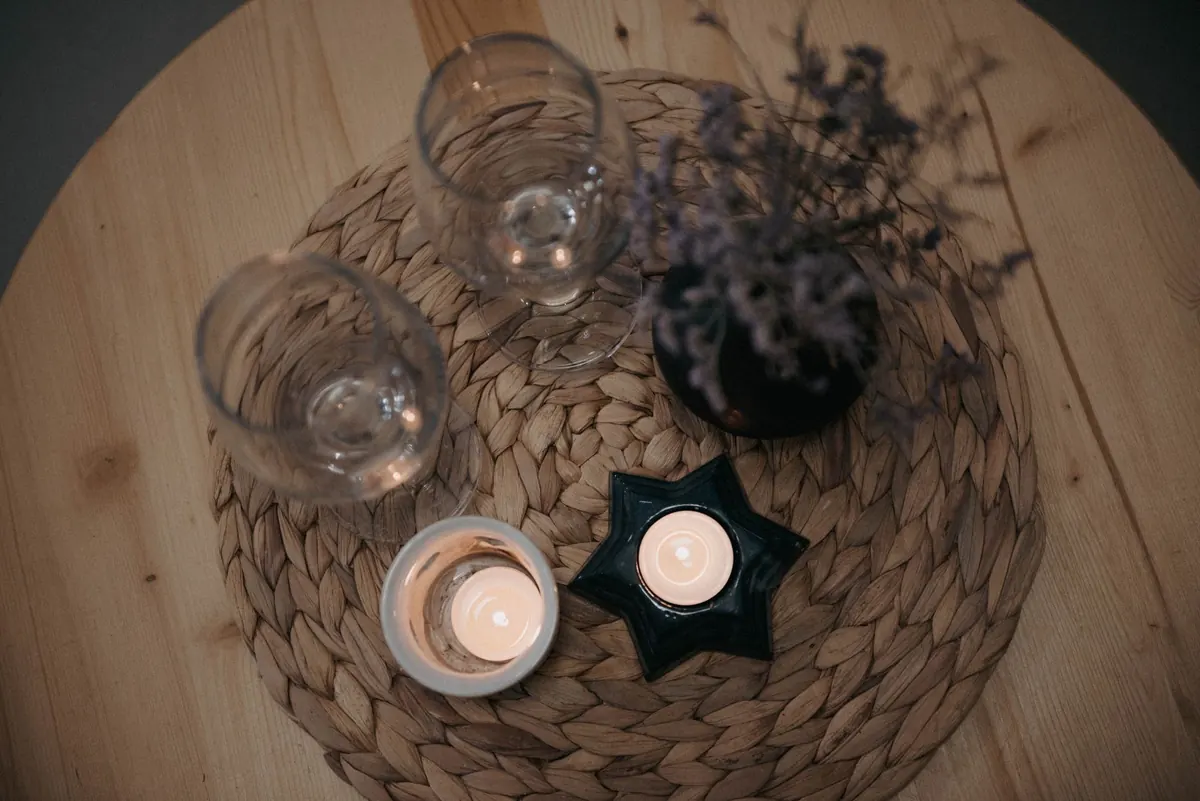
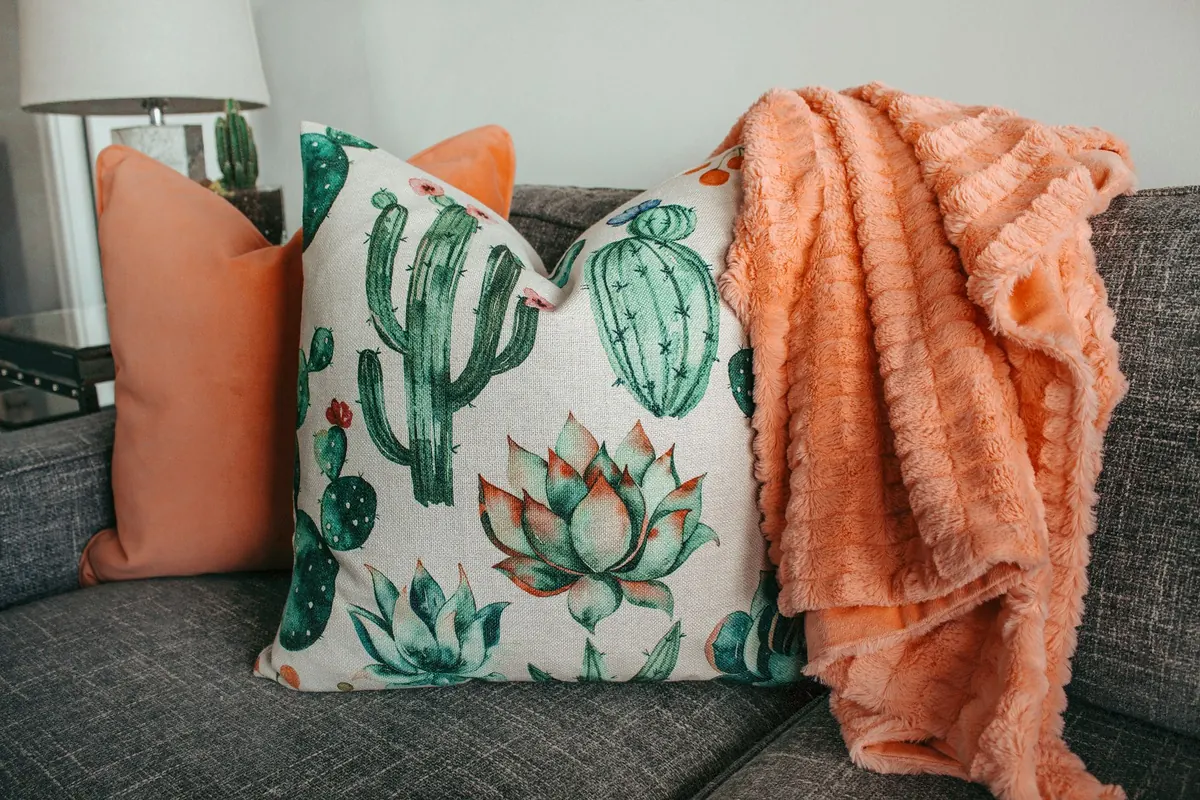
Two or three additions usually do it. A chunky knit or wool throw draped over an arm rather than folded in a perfect square. A pair of cushions in a different texture from the sofa fabric, and one in a warmer tone than anything else in the room. Floor-length curtains instead of bare blinds, hung close to the ceiling so the fabric softens the wall. Even a single candle on a tray changes how a corner reads at night.
A Weekend Checklist, In Order
- Replace every bulb in the room with matching warm white ones. Turn off the overhead light.
- Add two lamps at different heights, one near the sofa and one in a corner.
- Put a correctly sized rug down, with a pad underneath.
- Sit in your usual spot and look for the one corner that bothers you most. Fill that one.
- Add curtains if the windows are bare, or lengthen the ones you have.
- Toss one warm-textured throw and one cushion into the mix.
Fix the Feeling, Not the Floor Plan
You don't need a renovation to warm up a living room. Temperature in the visual sense is cumulative: every lamp, rug, and textured layer moves the room a few degrees. Start with the lighting and the floor, because those two carry the most weight for the least money, then live in the room for a week before you buy anything else. You'll usually find that the fix you were dreading turned out to be a bulb and a rug.
Photo: Tama66 / Pixabay